Table of Contents
- Envisioning Your Bali Villa Dream
- Navigating Land Acquisition and Legalities in Bali
- Harmonious Design and Balinese Architectural Aesthetics
- The Permitting Pathway for Your Bali Villa
- Expert Construction Management and Quality Assurance
- Sustainable Building Practices and Local Materials
- From Completion to Your Bali Retreat
- Conclusions
Embarking on the journey of villa construction in Bali is a thrilling prospect. This guide will walk you through every critical step, from conceptualizing your dream home to the final touches. Discover how expert construction practices, blended with Bali’s unique charm, can bring your architectural vision to life, ensuring a seamless and rewarding experience in this tropical paradise.
Envisioning Your Bali Villa Dream
Envisioning Your Bali Villa Dream
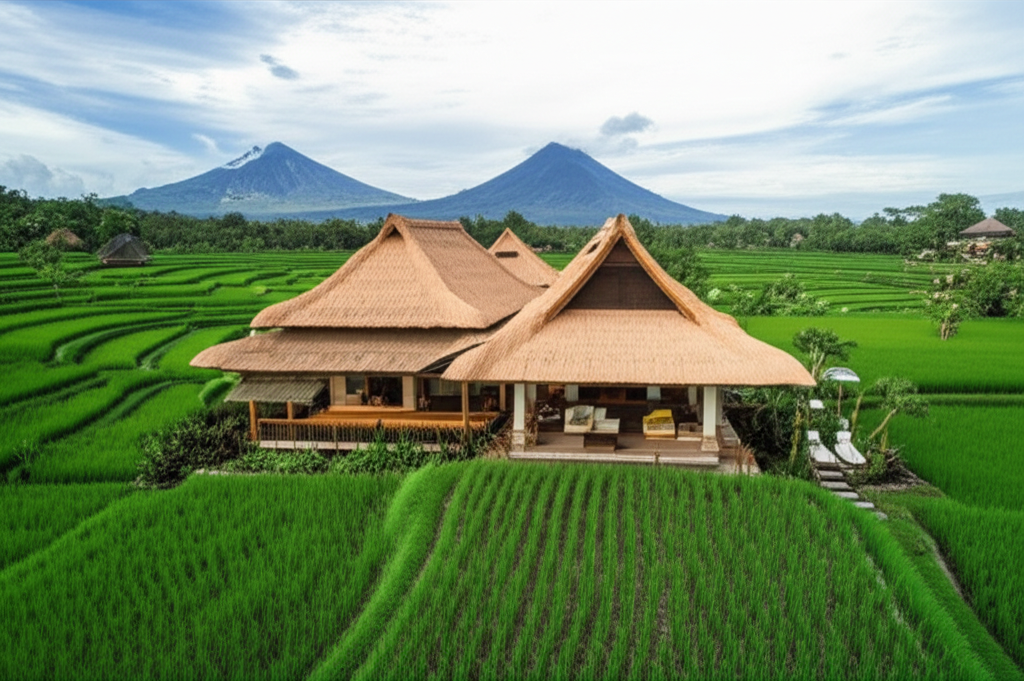
The very mention of a Bali villa evokes images of unparalleled tranquility, vibrant culture, and serene natural beauty. Bali’s unique allure stems from its spiritual essence, lush rice paddies, majestic volcanoes, and captivating beaches, making it an irresistible locale for a dream villa. Beyond its stunning landscapes, the island’s rich cultural tapestry, expressed through intricate temples, traditional ceremonies, and renowned arts, offers an immersive lifestyle. This blend of intrinsic charm and a booming tourism sector also presents a compelling investment opportunity, positioning a Bali villa as both a personal sanctuary and a valuable asset. This makes villa construction Bali an endeavor rich with promise and potential.
Defining your vision is the crucial first step. What architectural style resonates with you? Do you picture a sleek modern villa, a traditional Balinese haven with intricate details, or a sophisticated fusion? Consider your desired amenities: an expansive infinity pool, tropical gardens, a dedicated yoga space, or cutting-edge entertainment systems. Equally important is the intended use – a private residence, a lucrative rental property, or a hybrid model. Your answers will shape every aspect of your villa construction Bali project. For comprehensive details on building your dream, refer to our guide on island construction.
Initial budget estimation and realistic expectations are paramount. While Bali offers competitive construction, a high-quality villa demands significant investment. Researching general costs, considering land size, material choices, and design complexity, will establish a preliminary financial framework. This early assessment aligns your dream with practical realities. Understanding the demystifying construction costs in Bali is essential for a solid foundation.
Clearly outlining your needs and wants *before* engaging professionals is critical. This detailed brief becomes the guiding document for architects, designers, and general contractors in Bali, ensuring everyone understands your aspirations and constraints. Thorough preparation minimizes misunderstandings, streamlines design, and ultimately leads to a more efficient and satisfying build. This meticulous groundwork is the bedrock of a successful Bali building insights project.
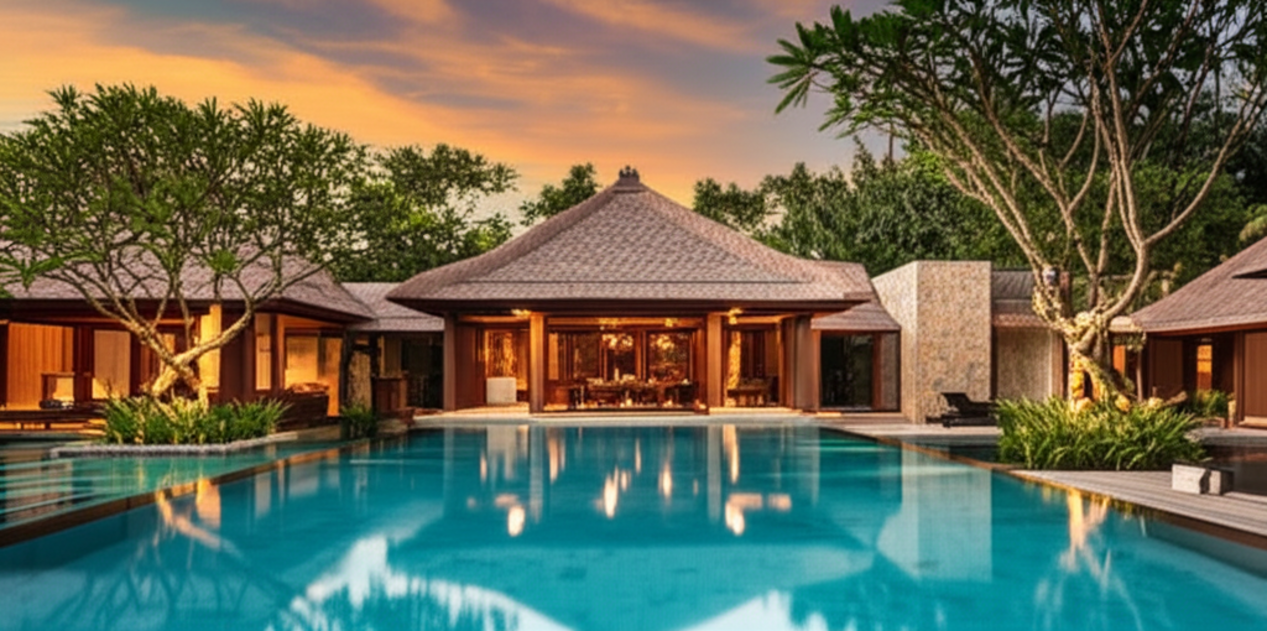
Imagine waking to the rustle of palm trees, the scent of frangipani, and soft morning light filling your bespoke space. Picture evenings by your private pool, the sky ablaze with a tropical sunset, creating cherished memories in a home designed exclusively for you. This is the profound potential of a Bali villa – a personal sanctuary in paradise, meticulously crafted to reflect your deepest desires. With careful planning and a clear vision, your Bali villa awaits, ready to transform from a dream into a tangible, breathtaking reality.
Navigating Land Acquisition and Legalities in Bali
For those envisioning their paradise retreat and embarking on villa construction Bali, understanding the intricate legal landscape of land acquisition is paramount. Indonesian land ownership laws stipulate a clear distinction: freehold land, known as Hak Milik, is exclusively reserved for Indonesian citizens. This fundamental principle means that foreign individuals cannot directly own land in perpetuity. Therefore, foreign investors must navigate alternative legal structures to secure land for their dream villa.
One prevalent option is Hak Sewa, or Leasehold. This arrangement involves leasing land for a predetermined period, typically ranging from 25 to 30 years, often with contractual options for extension. While offering a more accessible entry point with lower upfront costs compared to purchasing a full ownership right, it’s crucial to understand that you are acquiring the right to use, not own, the land. The advantages lie in its relative simplicity and reduced capital outlay, making it a popular choice for many. However, the primary disadvantage is the finite nature of the lease, requiring careful consideration of extension clauses and the eventual return of the land to the freeholder.
Another structure is Hak Pakai, or Right to Use. This right can be obtained by foreign individuals residing in Indonesia or foreign legal entities. Hak Pakai grants the right to use and occupy land for a specific period, generally 25 years, also with possibilities for extension. While it offers a more direct right than a pure lease, it usually carries limitations regarding commercial exploitation and is more commonly utilized for personal residential purposes.
For those planning a more substantial or commercially-oriented villa investment in Bali, establishing a PT PMA (Perseroan Terbatas Penanaman Modal Asing), a Foreign-Owned Company, is often the most robust legal pathway. Through a PT PMA, a foreign entity can acquire Hak Guna Bangunan (HGB), or Right to Build. HGB grants the right to construct and possess buildings on state land or Hak Milik land for an initial period of 30 years, extendable by an additional 20 years, and then another 30 years. This structure provides a secure and comprehensive framework, particularly beneficial for operating rental villas or other commercial ventures. It does, however, entail corporate responsibilities, including compliance and tax obligations, which are best managed with expert assistance.
Regardless of the chosen structure, thorough due diligence is non-negotiable. This critical step involves conducting comprehensive land surveys to verify boundaries and size, meticulously checking local zoning regulations to ensure the land is designated for villa construction and free from restrictions like green belt zones. It is imperative to ensure clean land titles, free from any disputes or encumbrances, and to verify legal and practical access rights to the property. This scrutiny prevents future complications and protects your investment.
Given the complexities of Indonesian land law, the necessity of engaging reputable local legal counsel and notaries (Pejabat Pembuat Akta Tanah – PPAT) cannot be overstated. These local experts are crucial for navigating the intricate regulations, conducting thorough due diligence, drafting legally sound agreements, and ensuring that all transactions comply with Indonesian law. Their expertise is your safeguard, providing peace of mind as you move closer to realizing your Bali villa dream. Their guidance helps to demystify processes and protect your interests, laying a solid legal foundation before any architectural design, as will be discussed in the next chapter, can even begin.
Harmonious Design and Balinese Architectural Aesthetics
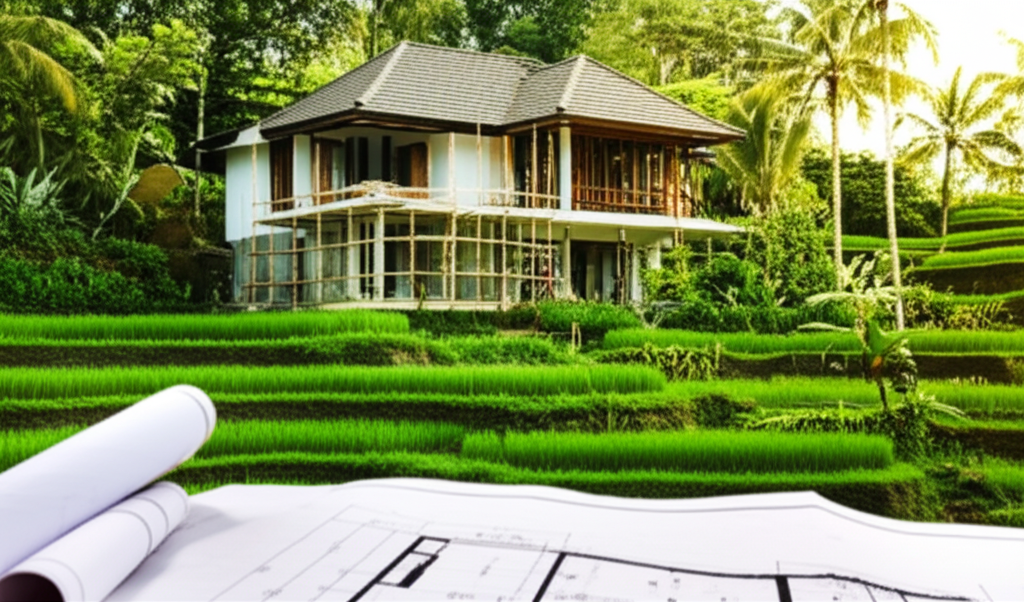
After navigating the complexities of land acquisition, the architectural design phase is paramount for your villa construction Bali. This is where your vision takes tangible form, deeply rooted in the island’s unique aesthetic and philosophical traditions. Balinese architecture isn’t just about beauty; it embodies the spiritual principle of Tri Hita Karana – the harmonious relationship between humans, nature, and the divine. This philosophy guides every design decision, from layout to details, creating a sanctuary integrated with its environment.
Further influencing design are Tri Mandala and Sanga Mandala. Tri Mandala dictates thoughtful spatial zoning, organizing the property into distinct outer, middle, and inner zones, each with varying levels of privacy and spiritual significance. Public areas often transition to semi-private living spaces, culminating in private sanctuaries. Sanga Mandala governs directional orientation, aligning buildings with cardinal points or significant natural landmarks like mountains or the sea. This ensures optimal positioning for sunlight, natural breezes, captivating views, and spiritual coherence, making your villa an intrinsic part of the landscape.
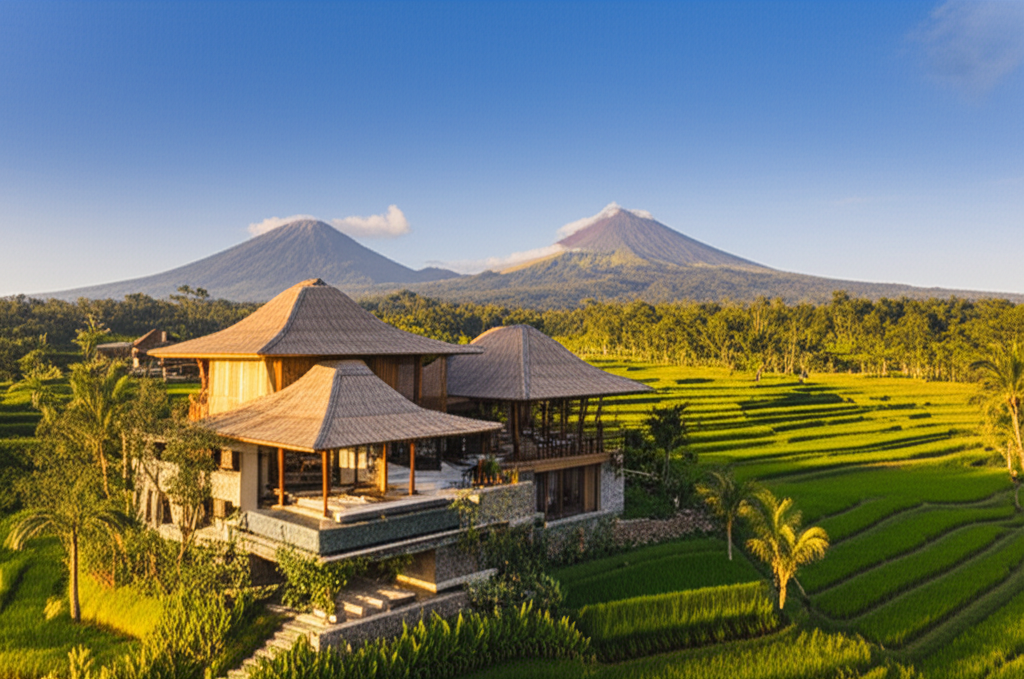
A defining characteristic of Balinese design is its profound connection to nature, evident in the extensive use of local and natural materials. Roofing frequently features traditional thatch, such as *ijuk* or *rumbia leaves*, offering natural insulation and a distinct tropical aesthetic. The structural elegance of bamboo and the rich beauty of local coconut or teak wood are commonly incorporated, lending warmth and organic textures. Local stone, like sandstone and andesite, forms robust foundations and decorative elements, while traditional bricks often complete walls, sometimes exposed for rustic charm. These materials not only contribute to authentic Balinese appeal but also offer sustainable and climate-appropriate building solutions.
Outdoor living spaces are central to Balinese villa construction, blurring the lines between indoor comfort and the lush tropical environment. Designs often incorporate open-plan layouts with expansive verandas, traditional open-sided pavilions for dining or relaxation, and serene courtyards. These elements are meticulously integrated with vibrant tropical gardens and inviting swimming pools, fostering a continuous flow and an immersive paradise experience. The design prioritizes maximizing natural light and airflow, promoting tranquility and a deep connection to the vibrant surroundings.
Given this intricate balance, engaging architects with a deep understanding of both international design standards and Balinese cultural nuances is essential for successful construction in Bali. Such experts navigate local building codes and design ethos to create a villa that is both structurally sound and aesthetically authentic, meeting modern luxury expectations while honoring local heritage. For comprehensive assistance, consider services found at build and design services in Bali. Critical to this process is also climate-responsive design, including natural ventilation via high ceilings and strategic fenestration, effective shading through deep eaves and pergolas, and orienting the villa to minimize heat gain and maximize natural airflow. Ensuring comfort without excessive reliance on air conditioning is key. Understanding these crucial architectural requirements, further detailed in architectural requirements in Bali, sets the perfect foundation for the next crucial step: securing the necessary permits.
The Permitting Pathway for Your Bali Villa
The journey to bringing your Bali villa to life transitions from inspired design to the crucial administrative phase: the permitting pathway. Navigating the legal landscape of villa construction in Bali is a foundational step, ensuring your dream home adheres to all local regulations and community expectations. This process, while seemingly complex, is manageable with the right expertise and preparation, setting the stage for a smooth construction in Bali.
At the heart of contemporary building approvals in Bali is the *Persetujuan Bangunan Gedung (PBG)*, which has superseded the former Izin Mendirikan Bangunan (IMB). The PBG serves as the primary building permit, signifying that your proposed construction aligns with all technical requirements, safety standards, and environmental considerations. Applying for a PBG demands a comprehensive submission, including detailed architectural drawings that embody principles like Tri Hita Karana, structural calculations, technical specifications, and administrative documents such as proof of land ownership and applicant identity. These documents are meticulously reviewed to confirm the building’s integrity and compliance, ensuring that the beautiful designs conceived for your villa are structurally sound and legally permissible.
Beyond the PBG, several other essential permits and clearances are integral to the legal construction of your villa. For larger projects or those in sensitive areas, an environmental impact assessment, known as an AMDAL (Analisis Mengenai Dampak Lingkungan) or UKL-UPL (Upaya Pengelolaan Lingkungan dan Upaya Pemantauan Lingkungan), might be required. This assesses potential environmental effects and outlines mitigation strategies, underscoring Bali’s commitment to sustainable development. Crucially, securing neighborhood approvals, often in the form of a *Banjar* letter (Surat Keterangan Lingkungan), is paramount. This community endorsement demonstrates local acceptance, reflecting the Balinese value of communal harmony. Additionally, permits for essential utilities, such as electricity and water connections, must be obtained to ensure your completed villa is fully functional and comfortable.
A critical aspect of the permitting process is understanding and aligning with the island’s zoning regulations, known as the *Rencana Tata Ruang Wilayah (RTRW)*. This spatial planning framework dictates land use across different areas, designating zones for residential, commercial, agricultural, or conservation purposes. Before any design work commences, it is imperative to verify that your proposed villa construction aligns with the RTRW designation for your specific plot. Misalignment can lead to significant delays, permit rejections, or even necessitate costly redesigns or land acquisition issues. For a deeper dive, explore our guide on navigating the PBG process.
The permitting process in Bali, while structured, can present potential challenges. These may include bureaucratic complexities, language barriers, and evolving regulatory interpretations. To mitigate these pitfalls, it is highly advisable to engage experienced permit agents or local consultants. These professionals possess invaluable local knowledge, understand the nuances of the system, and can effectively liaise with government offices and local authorities on your behalf. Maintaining good relationships with all stakeholders, including the local Banjar and relevant government departments, can also significantly streamline the process. A realistic timeline for permit acquisition typically ranges from three to six months, though this can vary based on project complexity and the efficiency of the local administration. Factoring this period accurately into your overall project schedule is vital to prevent unexpected delays in the subsequent construction phases of your villa construction Bali. Engaging an experienced builder or contractor early, even for permit guidance, can prove beneficial.
Expert Construction Management and Quality Assurance
Expert Construction Management and Quality Assurance
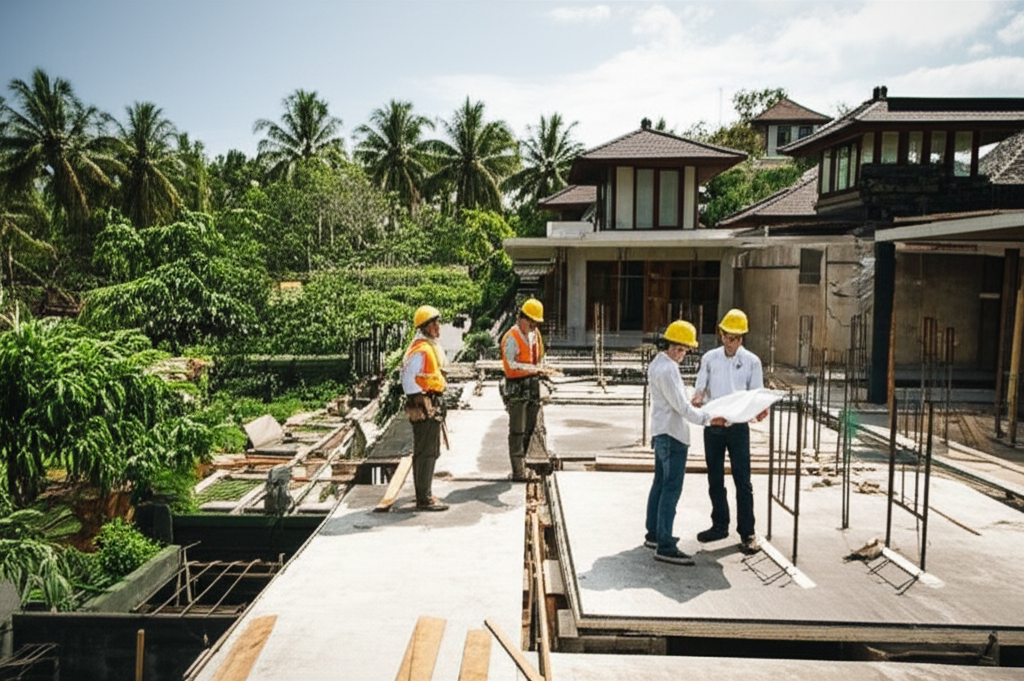
With your permits secured, the crucial construction phase for your *Bali villa* begins, demanding expert management and rigorous quality assurance. Selecting a reputable and experienced builder or contractor with a proven track record in Bali is foundational for a successful build. Diligently vet their credentials: request strong *references*, review a diverse *portfolio*, verify their *legal standing*, and confirm comprehensive *insurance* coverage. This due diligence ensures a reliable partner for your investment. For further guidance, see finding the perfect contractor in Bali.
The construction of your *Bali villa* proceeds through defined stages:
- Critical *foundation* work establishes structural integrity.
- The *structural framework* erects the villa’s skeleton.
- *Roofing* provides essential protection against the tropical climate.
- *Electrical and plumbing installations* create vital infrastructure.
- *Finishes* like flooring, tiling, and painting bring aesthetic appeal.
- Finally, *landscaping* integrates your villa with its natural surroundings.
Understanding these phases aids in effective professional construction project management in Bali.
Effective project management strategies are indispensable. This includes *regular site visits*, detailed *progress reports*, and maintaining *transparent communication channels* between all parties—owner, architect, and contractor. These ensure alignment and proactive problem-solving. Rigorous quality control measures are paramount: thorough *material inspection* upon delivery, strict *adherence to architectural drawings and specifications*, and periodic *structural integrity checks* by qualified engineers are critical to the safety and longevity of your investment. This commitment to construction quality control in Bali is non-negotiable.
Robust budget management and cost control are equally vital. Be prepared for *managing variations* through formal change orders, and always include *contingency planning* (ideally 10-15% of the budget) for unforeseen expenses. Clearly defined *payment schedules*, linked to verifiable construction milestones, foster trust and financial clarity. Gain deeper insights into financial oversight with construction cost management in Bali.
Finally, anticipate and overcome common challenges inherent to *villa construction Bali*. These often include *material availability*, where specialized items may require longer lead times, and nuances in *labor management*. Strategies involve partnering with a contractor possessing deep local knowledge and strong supply chain networks, meticulous procurement planning, and dedicated on-site supervision. A local expert, such as those highlighted in why our Bali contractors are your best bet, can navigate these issues efficiently, ensuring your dream villa is built with precision and setting the foundation for integrating sustainable practices.
Sustainable Building Practices and Local Materials
Embracing the natural splendor of the island, sustainable building practices and the thoughtful integration of local materials are paramount in achieving a truly harmonious Bali villa. This approach not only minimizes environmental impact but also deeply resonates with the Balinese cultural philosophy of Tri Hita Karana – harmony with God, with humanity, and with nature. Our commitment to sustainable structures Bali begins with the very elements that comprise your dream home.
We extensively utilize locally sourced, renewable resources and traditional craftsmanship. Bamboo, a remarkably fast-growing and strong plant, serves as an excellent structural and decorative material, offering unique aesthetic appeal and incredible durability when treated correctly. Reclaimed wood, often sourced from old Javanese homes or fishing boats, imbues your villa with rich history and character while significantly reducing the demand for new timber. Natural stones, such as volcanic rock and river stones abundant across the island, are ideal for retaining walls, cladding, and intricate pathways, providing both structural integrity and an organic connection to the landscape. For roofing, traditional materials like alang-alang thatch or ironwood (sirap) shingles are favored for their natural insulation properties, aesthetic charm, and ability to blend seamlessly with the tropical surroundings. These choices contribute to optimal roofing solutions for Bali’s tropical climate.
Beyond materials, energy efficiency is designed into every aspect of your villa. Passive cooling techniques are foundational, employing strategic architectural elements such as generous roof overhangs, wide verandas, and carefully positioned windows and doors to encourage cross-ventilation. This natural airflow significantly reduces the need for air conditioning, creating a consistently comfortable internal climate. Efficient LED lighting, maximized use of natural daylight through skylights and expansive openings, and the consideration of solar power integration further reduce energy consumption, aligning your villa with forward-thinking innovative construction in Bali.
Water management is another critical component of a truly sustainable villa. Rainwater harvesting systems collect and store rainwater for irrigation and other non-potable uses, reducing reliance on groundwater. Greywater recycling systems, which treat water from sinks and showers, can provide a sustainable source for garden watering. Furthermore, the installation of efficient plumbing fixtures, including low-flow toilets and showerheads, drastically cuts down on overall water consumption. On-site waste management during construction is meticulously planned, focusing on reducing waste generation, rigorous segregation for recycling, and responsible disposal of unavoidable debris. This disciplined approach reflects our commitment to holistic sustainability and allows us to provide valuable Bali building insights.
Ultimately, designing with the environment in mind means minimizing disruption to the existing natural ecosystems. This involves careful site planning that incorporates existing trees and topography into the landscape design, rather than clearing them. The goal is to create a villa that feels inherently part of its environment, respecting the land it occupies. This thoughtful approach to sustainable design in Bali ensures that your Bali villa not only stands as a testament to luxury but also as a beacon of ecological responsibility, a true reflection of the island’s spirit.
From Completion to Your Bali Retreat
As the structural integrity of your dream retreat, meticulously planned in earlier stages of villa construction Bali, reaches its final form, the focus shifts to imbuing it with soul and functionality. This exhilarating phase marks the true customization of your paradise, starting with the finishing touches. Interior design and furnishing are where the architectural vision meets liveability. Our expert team collaborates with you to select bespoke furniture, often crafted from sustainably sourced local woods, and exquisite textiles that blend contemporary comfort with traditional Balinese elegance. The island is a treasure trove of artistic talent; therefore, the selection of local artisan crafts, art, and decor becomes a significant part of enhancing the authentic Balinese aesthetic. From intricate wood carvings that tell ancient stories to vibrant paintings and hand-woven fabrics, each piece adds character and supports the local economy, connecting your villa deeper to its cultural home. You can learn more about integrated design approaches at Integrated Contractor Interior Design in Bali.
Equally vital to the villa’s allure is its exterior. Landscaping and garden design are meticulously planned to create lush, tropical gardens that not only complement the villa’s architecture but also provide essential privacy and a sense of tranquil immersion. Think of cascading bougainvillea, fragrant frangipani trees, and carefully placed palms that sway gently in the breeze, framing stunning views. Water features, traditional stone paths, and strategically placed outdoor lighting contribute to an ambiance of serene luxury, extending your living space into nature.
Before the grand unveiling, a series of stringent final inspections are conducted. This involves creating a comprehensive “punch list” detailing any minor imperfections or adjustments required, ensuring every detail aligns with the agreed-upon standards. A dedicated defect rectification period follows, allowing our team to promptly address any outstanding issues. Crucially, all installations – electrical, plumbing, and integrated appliances – undergo rigorous testing to guarantee they are in perfect working order, ensuring your safety and comfort from day one. This commitment to quality is a hallmark of comprehensive home contractor services in Bali.
The culmination of the construction journey is the official handover process. This critical step involves obtaining all necessary final occupancy certificates, a legal requirement that confirms your villa is safe and ready for habitation. You will receive comprehensive documentation, including warranties for all major installations, appliance manuals, and “as-built” drawings of your property. This thorough handover ensures you have all the essential information for your new home. For a deeper understanding of the entire building process, consider exploring our insights on Construction and Contractors in Bali.
Beyond the handover, several post-construction considerations ensure your Bali retreat remains a sanctuary. For investment properties or those seeking peace of mind, robust property management options are available, covering everything from routine maintenance and comprehensive security to potential rental management services. This ensures your villa remains pristine and profitable without your constant presence. Furthermore, considerations for staffing – including experienced housekeepers, diligent gardeners, and reliable security personnel – are crucial. A well-managed local team not only maintains the property but also enhances the authentic island living experience. For effective project oversight, refer to our guide on Residential Construction Project Management in Bali.
Finally, the moment arrives: stepping into your completed, exquisitely built Bali villa. This is more than just owning a property; it’s about embracing the island lifestyle. Imagine waking to the sound of tropical birds, enjoying breakfast on your private terrace overlooking your lush garden, and experiencing the tranquility that only a perfectly crafted Bali retreat can offer. Your Bali Villa Awaits: Expert Construction from Start to Finish culminates in this ultimate experience – your personal slice of paradise, ready for you to enjoy. For a complete overview of our construction philosophy, visit Your Bali Villa Awaits: Expert Construction from Start to Finish.
Conclusions
Building your Bali villa is an investment in a lifestyle, an experience that intertwines meticulous planning with the island’s serene beauty. By prioritizing expert guidance, adhering to local regulations, and embracing sustainable practices, your construction journey will culminate in a breathtaking retreat. Your personalized slice of paradise, expertly crafted from start to finish, truly awaits.