Table of Contents
- The Allure of Building in Paradise Initial Considerations for Your Bali Villa
- Navigating Regulations and Land Acquisition Understanding the Bali Legal Landscape
- Designing Your Dream Bali Villa Blending Aesthetics with Functionality
- Expert Construction Techniques and Sustainable Practices in Bali
- Interior Design, Landscaping and Finishing Touches for Your Bali Oasis
- Project Management Budgeting and Handover Ensuring a Smooth Finish
- Conclusions
Embarking on the journey of villa construction Bali is an exciting prospect, promising a blend of tropical luxury and astute investment. This article serves as your definitive guide, exploring every critical phase of building your dream home on the Island of the Gods. From initial concept to final touches, discover the expert strategies and essential considerations that ensure a seamless and successful project, transforming your vision into a tangible paradise.
The Allure of Building in Paradise Initial Considerations for Your Bali Villa
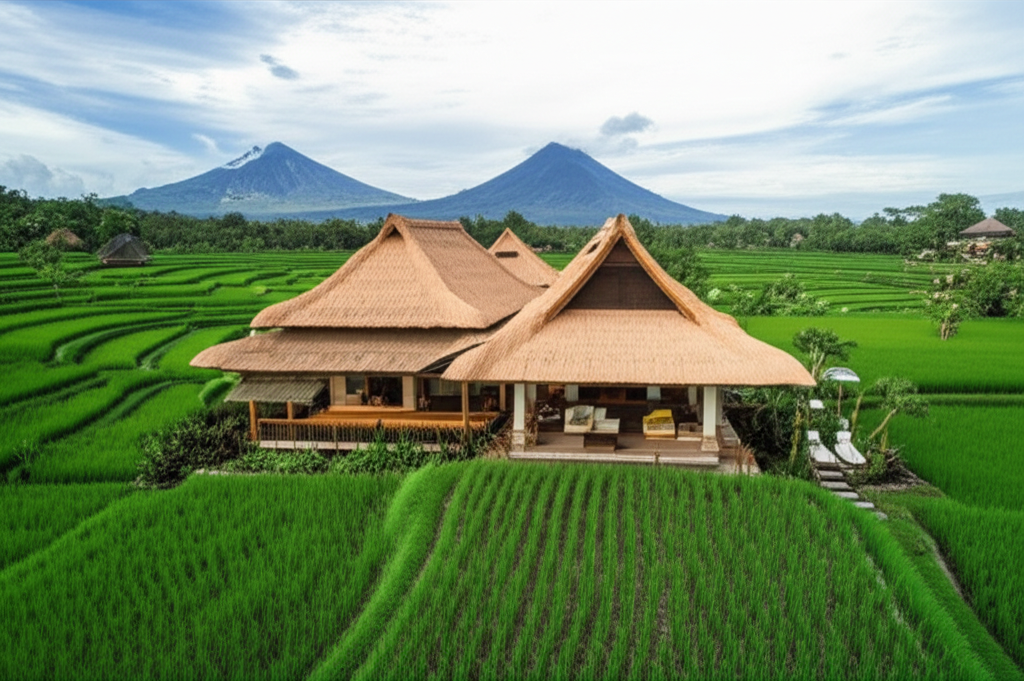
Bali, often revered as the “Island of the Gods,” captivates with undeniable charm, making it a prime destination for villa construction. Whether for a dream holiday home, permanent residence, or savvy investment, Bali’s appeal is multifaceted. Its vibrant culture, deeply rooted in spiritual traditions and artistic expression, offers an enriching backdrop. Imagine waking to gamelan, witnessing temple ceremonies, and experiencing Balinese hospitality. This immersive cultural experience fosters tranquility and belonging, enhancing the appeal of owning property here and making it a compelling choice for your next venture.
Beyond its cultural richness, Bali boasts a remarkably strong tourism economy, providing a robust foundation for property investment. Consistent international visitor influx ensures steady demand for high-quality accommodation, making villa rentals highly attractive. This economic vitality, coupled with the island’s breathtaking natural beauty – from verdant rice paddies to pristine beaches – creates an unparalleled environment for relaxation and financial growth. Owning a Bali villa offers tangible benefits: year-round sunshine, access to world-class dining and wellness, and an escape from the ordinary. For many, it represents the ultimate fusion of luxury, serenity, and profitable opportunity, making building a villa in Bali your next smart move.
As you embark on villa construction Bali, initial considerations are paramount. Defining lifestyle goals is the first crucial step: a private retreat, a bustling rental property, or a blend? Your answers will significantly influence design, location, and scale. Concurrently, assess investment potential. Bali’s property market continues to show promising returns, especially for well-designed and strategically located villas. Delving into a comprehensive guide to investing in Bali villas offers invaluable insights. Early planning is the cornerstone of a successful build, a phase to crystallize your vision and move from abstract ideas to concrete desires for your tropical abode.
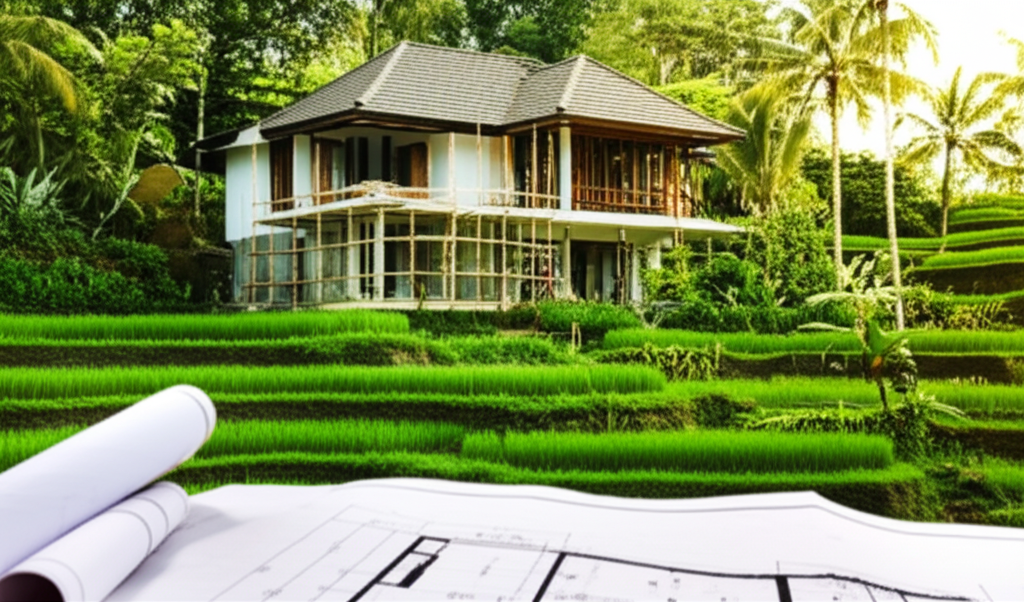
Emphasizing early planning means dedicating time to research, engaging local experts, and sketching your dream property’s fundamental elements. Consider architectural styles resonating with the island’s aesthetic while meeting functional needs. Think about desired amenities, sustainability, and how the villa integrates with its natural surroundings. Defining your vision for a Bali villa ensures every subsequent decision, from land acquisition to final finishes, aligns with your objectives. A clear vision acts as your compass, guiding the process and preventing costly deviations. This initial contemplative phase is essential for a seamless transition into the practicalities of island construction. To bring your vision to life, working with a design-focused team is key, as highlighted in designing your perfect island home. This careful groundwork sets the stage for detailed planning and execution.
Navigating Regulations and Land Acquisition Understanding the Bali Legal Landscape
Navigating the exciting prospect of villa construction Bali requires a profound understanding of the island’s unique legal landscape regarding land acquisition and building permits. For foreign investors and prospective homeowners, this initial phase is perhaps the most critical, laying the groundwork for a secure and compliant project. Indonesia’s agrarian laws are distinct, and without expert guidance, what seems straightforward can quickly become intricate.
The primary distinction for foreign individuals looking to acquire land in Bali is between *leasehold* and *freehold* ownership. *Freehold (Hak Milik)*, which grants the strongest form of ownership, is constitutionally reserved for Indonesian citizens. While various unofficial “nominee” structures have existed historically to bypass this, they carry significant legal risks and are strongly discouraged due to their lack of legal enforceability and potential for disputes. The widely accepted and legally secure path for foreigners is *Leasehold (Hak Sewa)*. This involves leasing the land from an Indonesian owner for a specified period, typically ranging from 25 to 30 years, often with guaranteed options for extension. A well-drafted lease agreement, meticulously reviewed by independent legal counsel, will outline all terms, conditions, and extension rights, providing a secure tenure for your investment. Understanding these nuances is paramount, and a detailed examination of your options can be found in our guide on Bali Property Investment Unveiled: Freehold vs. Leasehold for Foreigners.
Once land tenure is secured, the next vital step for villa construction Bali is obtaining the necessary building permits. The most significant of these is the *Persetujuan Bangunan Gedung (PBG)*, which has largely replaced the former IMB (Izin Mendirikan Bangunan – Building Permit). The PBG is essentially the government’s approval for constructing, altering, expanding, reducing, or demolishing a building, ensuring it complies with zoning regulations and safety standards. The application process for a PBG is comprehensive, requiring detailed architectural designs, structural calculations, and often an environmental impact assessment (UKL-UPL or SPPL) depending on the project’s scale and location. Navigating this process demands precision and an understanding of local bureaucratic procedures. For an in-depth look at this crucial step, refer to our comprehensive guide on Navigating the PBG Process for Building in Bali: A Comprehensive Guide. Other permits, such as those related to business operations if the villa is intended for commercial rental, will also be required.
Engaging local legal counsel is not merely advisable but absolutely essential throughout the land acquisition and permitting phases. An experienced Balinese lawyer will conduct thorough due diligence, verify land titles with the National Land Agency (BPN), and ensure that the land’s zoning, as defined by the *Rencana Tata Ruang Wilayah (RTRW)*, permits your intended villa construction project. Building on land not designated for residential or tourism purposes can lead to significant legal complications, fines, or even demolition. Detailed insights into zoning can be found in our article on Unlocking Development Potential: Building on Bali’s Designated Land Zones. Furthermore, your legal team will scrutinize all contracts, identify potential encumbrances, confirm access rights, and verify the availability of essential utilities. This meticulous approach to due diligence is the bedrock of a secure and successful Bali construction venture, safeguarding your investment and ensuring a smooth transition from initial vision to a legally sound design phase. For a holistic view of construction in Bali, visit construction.monad.now.
Designing Your Dream Bali Villa Blending Aesthetics with Functionality
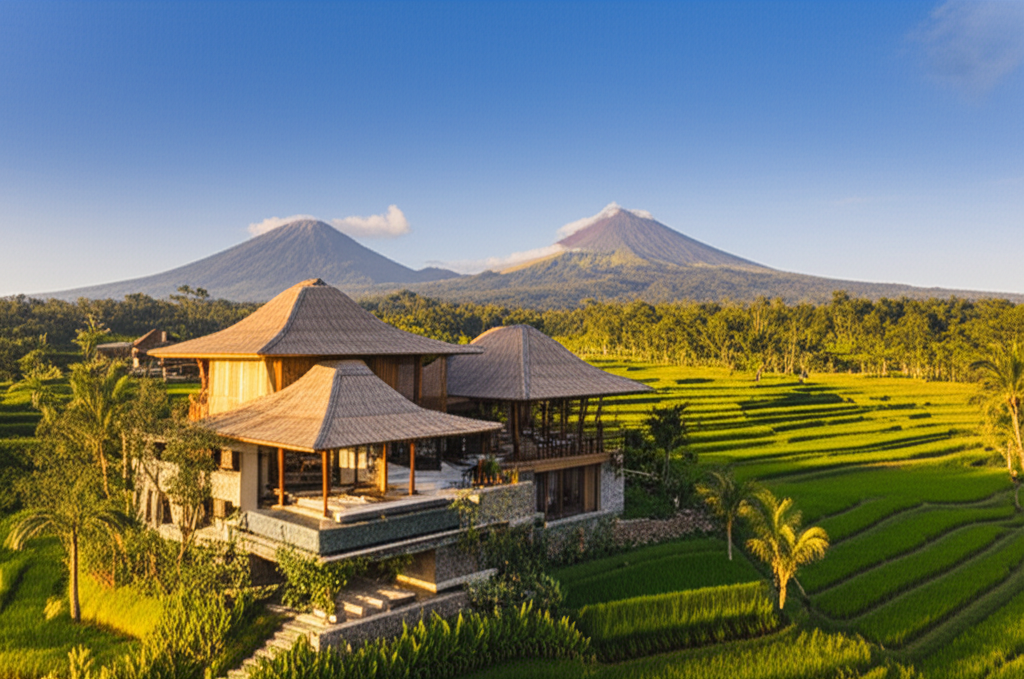
Designing your dream Bali villa begins with a profound understanding of how aesthetics and functionality intertwine within the island’s unique tropical context. The architectural and design phase is arguably the most creative, translating aspirations into a tangible blueprint for your future oasis. Popular Balinese architectural styles are not merely decorative; they are rooted in centuries of tradition, climate response, and spiritual principles. While pure traditional Balinese structures often feature intricate carvings, pitched roofs, and open-sided pavilions known as *bale*, modern luxury villa construction Bali often seeks to blend these timeless elements with contemporary design for ultimate comfort and elegance. The aim is to create a seamless flow between indoor and outdoor living, a hallmark of Balinese design, allowing residents to immerse themselves in the island’s natural beauty.
Integrating local aesthetics with modern luxury demands thoughtful consideration. This often manifests in the use of natural, locally sourced materials such as indigenous hardwoods like teak and ironwood, rich volcanic stone like Andesite or Paras Bali, and traditional roofing materials like *alang-alang* (thatched grass) or local clay tiles. These materials not only ground the villa in its surroundings but also age beautifully, adding character and warmth. Modern luxury is then woven in through sleek finishes, state-of-the-art appliances, spacious layouts, and sophisticated lighting, ensuring that while the villa feels authentically Balinese, it doesn’t compromise on contemporary conveniences. This thoughtful fusion is a cornerstone of designing your perfect island home.
Crucially, designing for Bali’s tropical climate is paramount for ensuring long-term comfort and durability. Effective natural ventilation is achieved through open-plan living areas, high ceilings, strategically placed louvered windows, and large sliding glass doors that allow sea breezes to flow freely through the property. Shading is equally vital to mitigate the intense equatorial sun; this involves incorporating wide roof overhangs, pergolas, and strategically planting trees. Material selection plays a critical role here too; opting for materials that breathe and resist humidity, rather than trap heat, is essential. For detailed architectural services that understand these nuances, consider consulting architectural services for your Bali build.
The concept of indoor-outdoor flow is not merely a trend in Bali but a necessity. Expansive terraces, decks, and poolside lounges become extensions of the interior living spaces, blurring the lines between built environment and nature. The integration of traditional Balinese elements further enhances this connection. Elegant *bale* pavilions provide shaded areas for relaxation or dining al fresco, while meticulously designed water features – from tranquil ponds to invigorating swimming pools – contribute to a cooling microclimate and evoke a sense of serenity. Lush tropical gardens, often incorporating native flora, become integral parts of the living experience, providing privacy, beauty, and a continuous sensory connection to the island. For comprehensive design and construction guidance, explore premier design contractor services in Bali, ensuring every element, from initial concept to the final flourish, is expertly handled. This thoughtful design approach ultimately creates a villa that is not only visually stunning but also inherently comfortable and perfectly adapted to its paradisiacal setting.
Expert Construction Techniques and Sustainable Practices in Bali
Expert Construction Techniques and Sustainable Practices in Bali
Building a luxurious Bali villa requires a deep understanding of the island’s unique environmental challenges and a commitment to expert construction techniques. Transitioning from the design phase, where aesthetics and tropical functionality are meticulously planned, the actual construction brings these blueprints to life with a focus on structural integrity and sustainable practices.
Typical construction methods for a Bali villa predominantly involve reinforced concrete frameworks. This method is crucial given Bali’s seismic activity and ensures a robust, long-lasting structure capable of withstanding tropical weather conditions. For foundations, the choice is critical and depends heavily on the specific terrain. On stable, flat land, traditional strip foundations might suffice. However, Bali’s diverse landscape often necessitates more advanced solutions. Pile foundations are frequently employed in areas with soft or unstable soil, or on sloped sites, to anchor the structure securely into deeper, more stable ground layers. The importance of structural integrity cannot be overstated; it is the backbone of your investment, protecting against natural elements and ensuring the safety and longevity of your property. Engaging professional foundation installers in Bali is paramount to get this crucial first step right.
Material selection is a balance between local charm and modern durability, with a strong emphasis on sustainability. Local materials like various hardwoods (such as reclaimed teak for interior accents), natural stone (Balinese stone, lava stone for cladding and outdoor areas), and traditional roofing elements like alang-alang grass can be beautifully integrated to maintain an authentic Balinese aesthetic. However, these are often complemented by imported, high-performance materials for critical structural components, waterproofing, and utilities, ensuring resistance to humidity, termites, and general wear in a tropical climate. Durable, low-maintenance options are preferred to minimize future repair costs and environmental impact. For roofing, while traditional looks are popular, modern, well-insulated systems with strong waterproofing are essential to handle heavy monsoon rains and intense sun. Sustainable building practices in Bali prioritize locally sourced, eco-friendly options wherever possible.
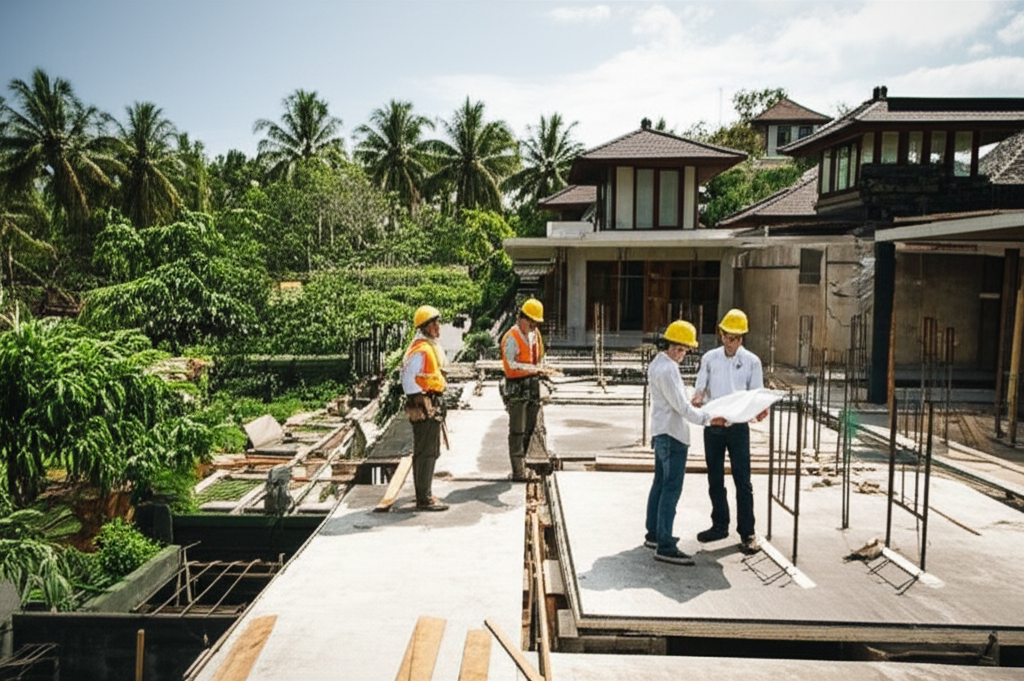
The construction process unfolds through several key stages, each requiring meticulous attention. Civil work begins with site preparation, including careful excavation, precise leveling, and the establishment of efficient drainage systems, vital for managing tropical downpours. Following this, the structural framework takes shape: the erection of columns, beams, and slabs using reinforced concrete, forming the skeletal structure of the villa. Roofing then seals the structure, providing essential protection. Finally, utility installations are integrated: high-quality electrical wiring with proper grounding and surge protection, robust plumbing systems for clean water distribution and waste management, and provisions for modern amenities like air conditioning and internet.
Throughout these stages, stringent quality control measures are indispensable. This involves continuous site supervision by experienced project managers and general contractors in Bali, regular inspections to ensure adherence to architectural plans and local building codes, and material testing to confirm standards are met. This comprehensive oversight guarantees that every aspect of your Bali villa construction aligns with the highest benchmarks of quality, durability, and safety, paving the way for the exquisite interior and exterior finishes to follow.
Interior Design, Landscaping and Finishing Touches for Your Bali Oasis
The culmination of expert villa construction Bali arrives with the crucial final stages: interior design, landscaping, and the meticulous installation of fixtures and fittings. This phase transforms a robustly built structure into a captivating, livable sanctuary. The objective is a harmonious blend of Balinese aesthetics and modern functionality, creating an inviting, luxurious environment that resonates with the island’s spirit.
For interiors, Balinese design emphasizes a seamless connection with nature and tranquility. This is achieved through open-plan layouts, abundant natural light, and indigenous materials such as carved timber, natural stone, and woven elements. To align with modern living standards, integrating smart home technologies, efficient climate control, and high-quality, comfortable furnishings is paramount. Furniture often includes bespoke pieces from local hardwoods or rattan, supporting artisans and imbuing authentic island charm. Lighting is critical for setting the mood; a layered approach using ambient, task, and accent lights creates warmth and highlights features. Consider elegant pendant lights, subtle recessed lighting, and strategic spotlights for Balinese art. Decor should be carefully curated, embracing local artistry through intricate carvings, hand-loomed fabrics, and artisanal ceramics to add character without clutter. The installation of fixtures and fittings—premium bathroom sanitary ware, state-of-the-art kitchen appliances, and elegant door hardware—demands meticulous precision and an unwavering eye for consistent aesthetics, ensuring durability and a sophisticated finish. For a truly cohesive vision, engaging an expert integrated contractor interior design in Bali can simplify this intricate stage, delivering exquisite results.
Beyond the villa’s walls, landscaping extends its design, significantly enhancing appeal and integrating harmoniously with the natural surroundings. Tropical gardens are a quintessential feature, characterized by lush foliage, vibrant blossoms, and serene water features like koi ponds or stone fountains. Plant selection prioritizes native species thriving in the local climate, minimizing maintenance and promoting water conservation. An infinity pool often serves as the striking centerpiece of the outdoor space, meticulously designed to merge visually with panoramic views, creating a breathtaking illusion. Material choices, such as natural stone coping and vibrant tile work, are critical for both aesthetic appeal and long-term durability. Crafting diverse outdoor living spaces—including shaded pergolas for al-fresco dining, tranquil gazebos, or strategically positioned lounging areas—maximizes enjoyment of Bali’s idyllic tropical climate. These outdoor zones should flow effortlessly from the interior, blurring conventional boundaries. This dedication to detail, from engaging interior design contractors in Bali to the final landscaping, ensures your villa truly embodies a luxurious and tranquil Bali oasis, a testament to luxury high-end residential construction in Bali and the principles of designing your perfect island home.
Project Management Budgeting and Handover Ensuring a Smooth Finish
Effective project management is the cornerstone of a successful villa construction Bali project, ensuring that your dream home transitions from blueprint to reality without undue stress or financial strain. It encompasses a meticulous oversight of every stage, from initial planning to the final handover, guaranteeing that all aspects align with your vision and expectations.
A robust project management strategy begins with a comprehensive budgeting and cost control framework. In the unique Balinese construction landscape, understanding potential cost variables is paramount. This involves not just material and labor costs, but also factoring in permits, unforeseen site challenges, and contingency funds. A skilled project manager will meticulously track every expense against the initial construction costs in Bali: your budget breakdown, identifying areas for potential savings through value engineering without compromising quality, and expertly managing any necessary change orders to prevent overruns. This proactive approach to smart & savvy construction cost management in Bali is critical for financial transparency and stability throughout the build.
Equally vital is the expert management of timelines. Delays in villa construction Bali can quickly escalate costs and cause considerable frustration. A seasoned project manager develops a realistic construction project schedule in Bali, taking into account local climate conditions, material procurement lead times, and the availability of skilled labor. They continuously monitor progress, anticipating potential bottlenecks and implementing mitigation strategies to keep the project on track. This dedication to professional construction project management in Bali involves regular site visits, progress meetings with contractors, and clear communication with all stakeholders. The project manager acts as your central point of contact, alleviating the burden of direct oversight. Their role is extensive: they rigorously oversee all contractors, ensuring their work adheres to the highest quality standards and the agreed-upon specifications. This includes stringent construction quality control in Bali at every phase, from structural integrity to the finishing details, ensuring your Bali villa meets international benchmarks for craftsmanship and durability. They are instrumental in problem-solving, mediating disputes, and ensuring that progress continues seamlessly towards completion.
The handover process marks the exciting culmination of your villa construction Bali journey. This crucial stage involves a detailed final inspection of the entire property by the project manager and the owner. A comprehensive “snagging list” or “punch list” is created, detailing any minor defects, incomplete items, or areas requiring adjustment. The project manager then ensures that all listed items are rectified promptly and to your satisfaction before final payments are disbursed. This process also includes verifying the functionality of all systems – electrical, plumbing, air conditioning, and pool equipment – and collecting all essential documentation. This typically comprises as-built drawings, warranties for appliances and installations, and operating manuals for various systems. Understanding local warranty considerations is paramount to securing your investment. Once the keys are handed over, the focus shifts to post-construction property management and maintenance. A tropical climate demands diligent care; regular preventative maintenance, including pest control, garden and pool upkeep, and structural checks, is vital. Establishing relationships with reliable local maintenance services is essential to preserving the value, beauty, and longevity of your exquisite Bali villa, allowing you to enjoy your paradise retreat for years to come.
Conclusions
Building a Bali villa is an intricate yet incredibly rewarding endeavor. By understanding the local landscape, adhering to regulations, engaging skilled professionals, and maintaining diligent oversight, your dream home can become a reality. This guide has illuminated the path from initial concept to the final handover, ensuring your expert construction journey in Bali is as smooth and successful as the finished product is breathtaking. Your tropical oasis truly awaits.