Table of Contents
- Vision to Reality Laying the Foundation for Your Bali Villa
- Designing Your Dream Balinese Oasis Architectural Harmony
- Navigating Bali’s Regulatory Landscape Permits and Approvals
- The Art of Construction Bringing Your Bali Villa to Life
- Expert Project Management Quality and Sustainability in Bali Construction
- From Blueprint to Bliss Completing Your Bali Villa Project
- Conclusions
A Bali villa represents the pinnacle of tropical living, blending luxurious comfort with the island’s unique charm. Embarking on villa construction Bali is an exciting endeavor, transforming your vision into a tangible sanctuary. This article provides a comprehensive guide to expert construction from start to finish, detailing every crucial step to ensure your dream Balinese home becomes a stunning reality, perfectly tailored to your desires and the island’s captivating environment.
Vision to Reality Laying the Foundation for Your Bali Villa
Your Bali Villa Awaits: Expert Construction from Start to Finish
Vision to Reality: Laying the Foundation for Your Bali Villa
The journey to building your dream home in paradise begins with a clear vision and meticulous planning. Before any ground is broken for villa construction Bali, it’s paramount to articulate precisely what you envision. This encompasses not just the aesthetic and functional aspects of your villa, but also its intended use – whether it’s a private sanctuary, a lucrative rental investment, or a blend of both. A well-defined vision will guide every subsequent decision, from architectural style to interior finishes. Simultaneously, robust budget planning is crucial. This involves a comprehensive breakdown of all potential costs: land acquisition, legal fees, permits, architectural and engineering services, construction, interior design, landscaping, and critically, a contingency fund to absorb unforeseen expenses. Understanding your financial capacity and securing financing early, whether through personal capital or navigating the complexities of local or international lending, is a foundational step in ensuring a seamless start to finish construction journey. For guidance on financial planning, refer to smart spending: navigating your construction budget in Bali.
The complexities of land acquisition in Bali present unique challenges, particularly for foreign ownership. Navigating the various options for land tenure in Indonesia is paramount.
- Hak Milik (Freehold): This grants full ownership rights but is exclusively available to Indonesian citizens.
- Hak Sewa (Leasehold): The most common and legally secure option for foreigners, allowing long-term lease of land, typically for 25-30 years with options for extension. This provides substantial control and usage rights without outright ownership.
Historically, nominee agreements were used, but these arrangements are fraught with significant legal risks and are strongly discouraged due to potential disputes and enforceability issues under Indonesian law. For a deeper understanding of foreign ownership, explore Bali property investment unveiled: freehold vs leasehold for foreigners and building your dream villa in Bali: a foreigner’s comprehensive guide to ownership and construction.
Before committing to a land plot, exhaustive due diligence is indispensable. This includes rigorously checking zoning regulations (often referred to as ITR or Spatial Plan) to ensure the land is designated for villa building or related tourism development. Ignoring zoning can lead to significant legal complications and construction halts. Furthermore, assess the plot’s accessibility – is there reliable road access? What is the proximity to essential infrastructure like electricity, water sources, and internet connectivity? These practical considerations directly impact construction logistics and future living comfort. The critical importance of early legal consultation with local experts cannot be overstated. Engaging seasoned legal professionals who specialize in Indonesian property law will provide invaluable guidance, helping you to interpret complex regulations, draft secure agreements, and navigate potential pitfalls, ensuring a smooth and compliant process from the outset. For insights into regulations, see navigating the red tape: your comprehensive guide to Bali building regulations.
Designing Your Dream Balinese Oasis Architectural Harmony
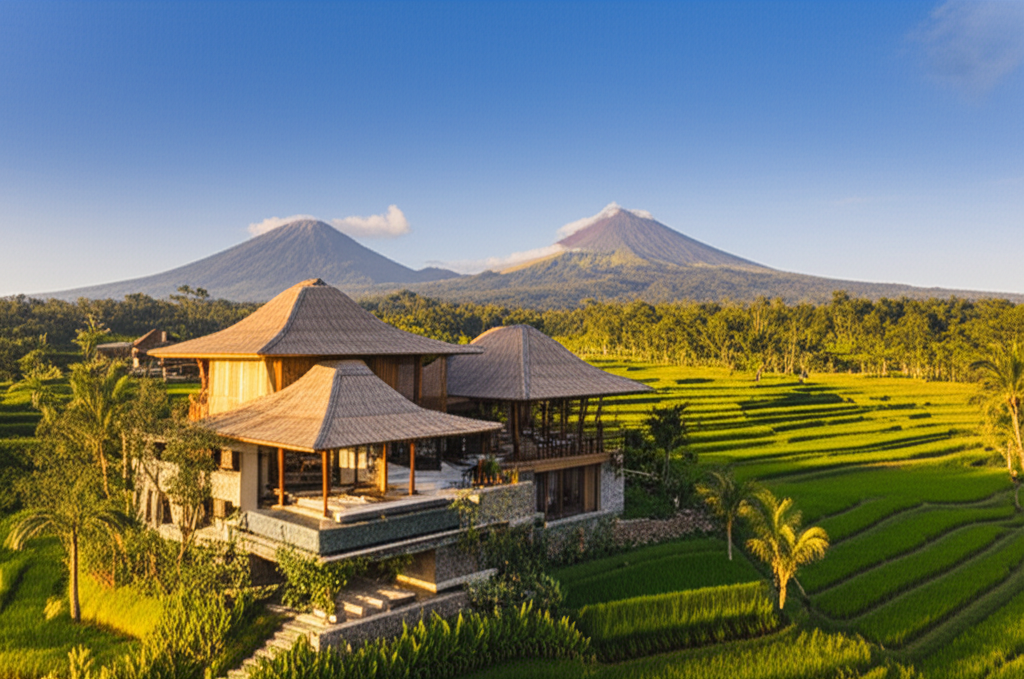
With the foundational elements of land acquisition and initial planning firmly in place, the journey of bringing your Balinese dream home to life transitions into the captivating phase of architectural design. This is where the essence of your vision begins to take tangible form, harmonizing with the unique spirit of the island. Designing your Bali villa is an intricate process, deeply influenced by the profound philosophical principles of Balinese architecture. Central among these is Tri Hita Karana, the concept of achieving harmony between God, humans, and nature. This translates into designs that respect the natural landscape, orient living spaces to embrace views, sunlight, and breezes, and incorporate natural elements like water features and lush gardens directly into the dwelling. Complementing this is Tri Mandala, the spatial zoning principle, which guides the layout of the villa into sacred, private, and public zones, ensuring functional flow and spiritual balance within the property.
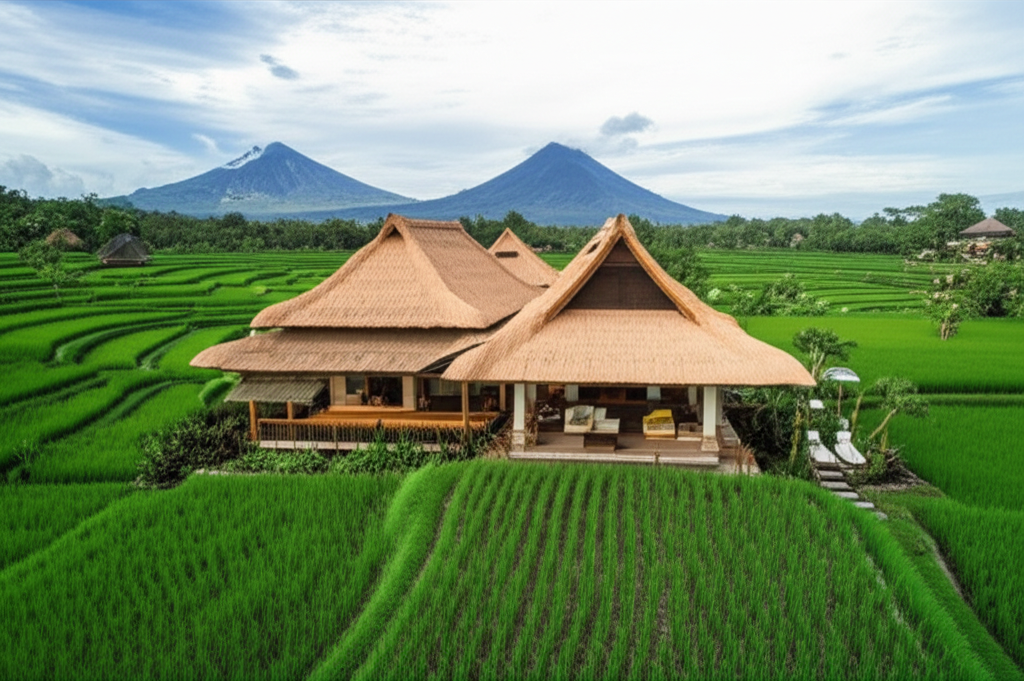
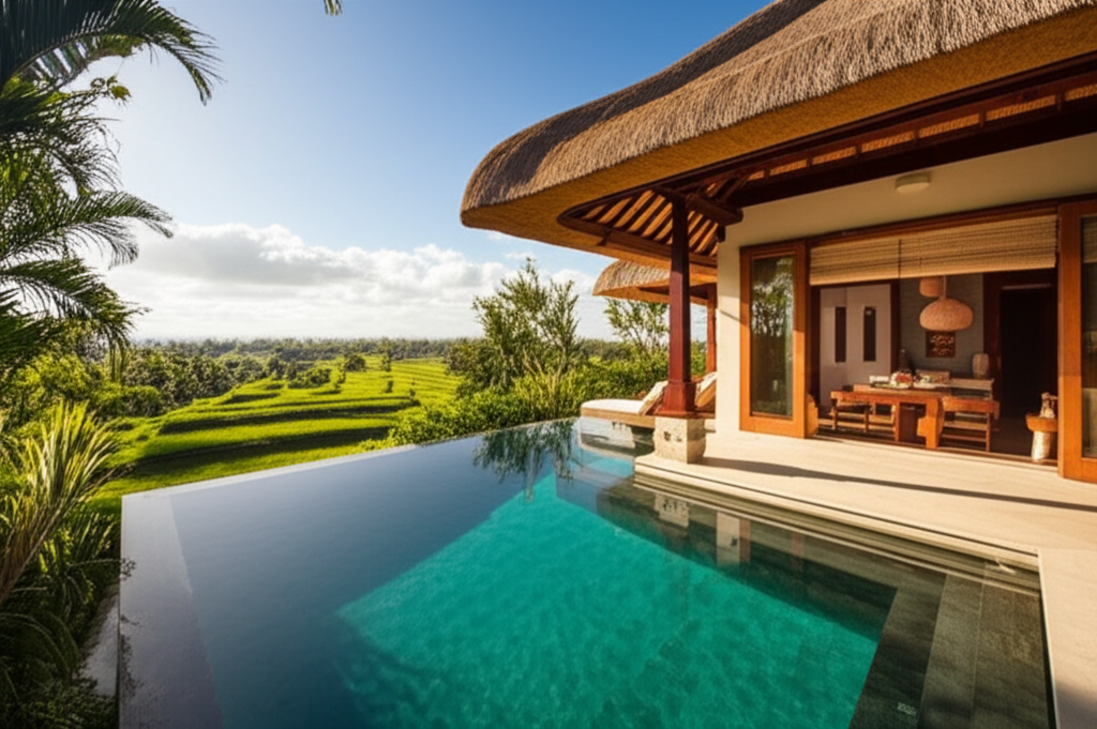
Considerations for Bali’s tropical climate are paramount. An expert architect specializing in villa construction Bali will meticulously plan for natural ventilation, strategically positioning openings and creating high ceilings to encourage airflow and minimize the need for artificial cooling. Effective shading solutions, through deep eaves, pergolas, and strategically planted trees, are crucial to mitigate the intense equatorial sun. Orientation also plays a vital role, maximizing desirable views while protecting against harsh sun exposure. The choice of local materials further enhances this synergy; thatch roofing offers excellent insulation, while sustainable resources like bamboo and coconut wood lend an authentic aesthetic and structural integrity. Luxurious teak is often used for intricate carvings and durable finishes, alongside robust local stone, which provides both cooling properties and a timeless appeal, grounding the structure within its natural environment.
Selecting an architect with a proven track record in design and construction in Bali is critical. Look for professionals who not only possess a strong portfolio but also demonstrate a deep understanding of Balinese cultural sensitivities and local building regulations, forming a crucial bridge to the subsequent permitting process detailed in our next chapter. They should excel at balancing aesthetic appeal with functionality, ensuring the villa is both beautiful and highly livable, all while championing sustainable practices. Interior design elements should seamlessly extend this architectural narrative, reflecting Balinese aesthetics through thoughtful material choices, natural textures, open-plan living, and art that celebrates local craftsmanship. This holistic approach ensures your Bali villa is not just a structure, but a sanctuary that truly embodies the spirit of paradise, a testament to expert construction from start to finish.
Navigating Bali’s Regulatory Landscape Permits and Approvals
After the intricate process of designing your dream Balinese oasis, the next critical phase in your villa construction Bali journey involves meticulously navigating the island’s regulatory landscape to secure all necessary permits and approvals. This step is paramount to ensure your project proceeds smoothly, legally, and without unforeseen delays, truly embodying expert construction from start to finish.
The cornerstone of building permits in Bali is the Persetujuan Bangunan Gedung (PBG), which replaced the former Izin Mendirikan Bangunan (IMB). The PBG is an approval from the local government that confirms your building plan complies with spatial planning regulations and building reliability standards. Obtaining this crucial permit signifies that your architectural design, structural integrity, and intended use align with local zoning and safety requirements. The documentation required for a PBG application is extensive and typically includes:
- Certified copies of land ownership documents (e.g., Freehold Certificate – SHM, or Right to Build – HGB).
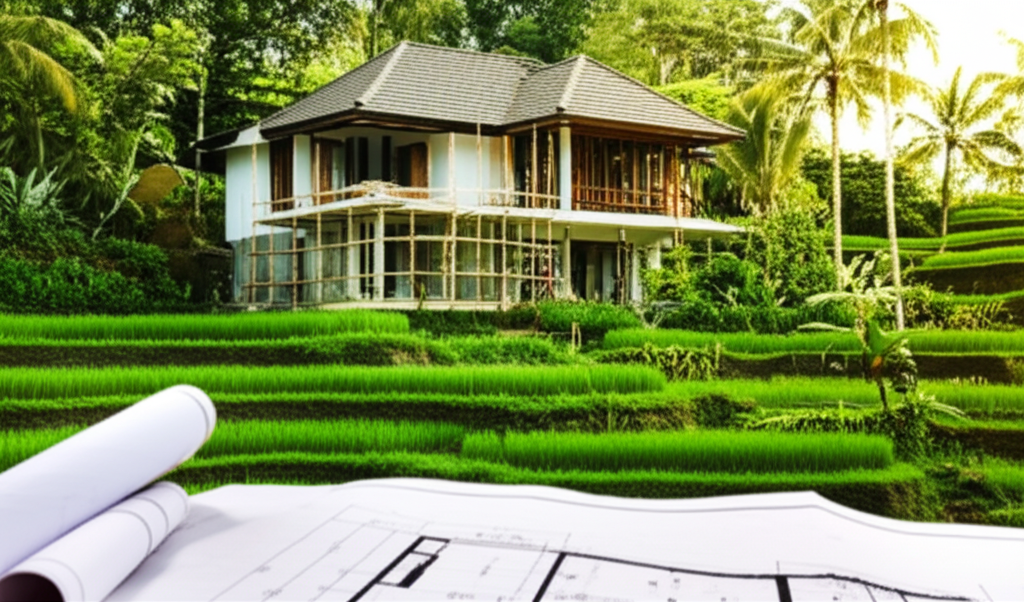
- Detailed architectural drawings (as developed in the previous phase), including floor plans, elevations, sections, and site plans.
- Structural calculations and drawings, prepared and verified by a licensed engineer.
- Environmental impact assessments or statements (SPPL/UKL-UPL), depending on the scale and location of your project.
- Identity documents of the applicant and any relevant company registration.
- Supporting letters from neighboring landowners (sometimes required).
The primary agency involved in processing PBG applications is the local government’s planning department, often referred to as Dinas Penanaman Modal dan Pelayanan Terpadu Satu Pintu (DPMPTSP). The typical timeline for approval can vary significantly, ranging from several months to over a year, depending on the complexity of your project, the completeness of your documentation, and the efficiency of the local administrative process.
Potential challenges and common pitfalls in the permitting process include bureaucratic hurdles, language barriers, inconsistencies in submitted documents, and unfamiliarity with specific local regulations or unwritten customs. Misinterpretations of zoning laws or protected area restrictions (such as green belts) can also lead to significant delays or even necessitate design revisions. To efficiently navigate this intricate process, it is absolutely vital to engage with local facilitators or legal advisors who possess extensive experience in Bali’s construction regulations. These experts can provide invaluable guidance, assist with document preparation, liaise directly with government agencies, and proactively address any emerging issues. Their expertise ensures full compliance and helps to mitigate delays, allowing your villa construction to move seamlessly from planning to the physical building phases, which we will explore next. Understanding the nuances of the PBG process is key to a successful venture.
The Art of Construction Bringing Your Bali Villa to Life
The journey of creating your dream Bali villa truly begins with the physical transformation of your chosen plot. The initial phase, site preparation, involves careful clearing, precise grading to establish optimal drainage, and meticulous excavation for the foundation. Given Bali’s diverse terrain, from gentle slopes to more challenging landscapes, expert assessment here is paramount to prevent future issues. Following this, the foundation work lays the essential groundwork. This stage includes digging trenches, pouring concrete footings, and installing robust reinforcement bars to ensure structural integrity against seismic activity and the tropical climate. The concrete slab is then poured, often incorporating a damp-proof membrane to protect against moisture. Foundation technologies employed are critical for the longevity of your villa.
Once the foundation is solid, structural framing commences, bringing the villa’s outline to life. Reinforced concrete columns and beams, a common and resilient choice in Bali, form the skeletal structure, followed by the careful construction of walls, typically using red brick or concrete blocks. The roofing phase then adds crucial protection and aesthetic appeal. Options range from the traditional, breathable Alang-Alang thatch, offering natural insulation and a classic Balinese look, to durable Ulin wood shingles or modern tile systems, all chosen with Bali’s heavy rainfall and intense sun in mind.
Simultaneously, utility installations are integrated:
- Electrical: Comprehensive wiring, strategically placed outlets, and lighting systems, often including surge protection due to local power fluctuations.
- Plumbing: Installation of water supply lines, efficient drainage systems, and water heating solutions.
- Sanitation: Development of robust septic tank systems or connections to local infrastructure, often incorporating greywater recycling for sustainability.
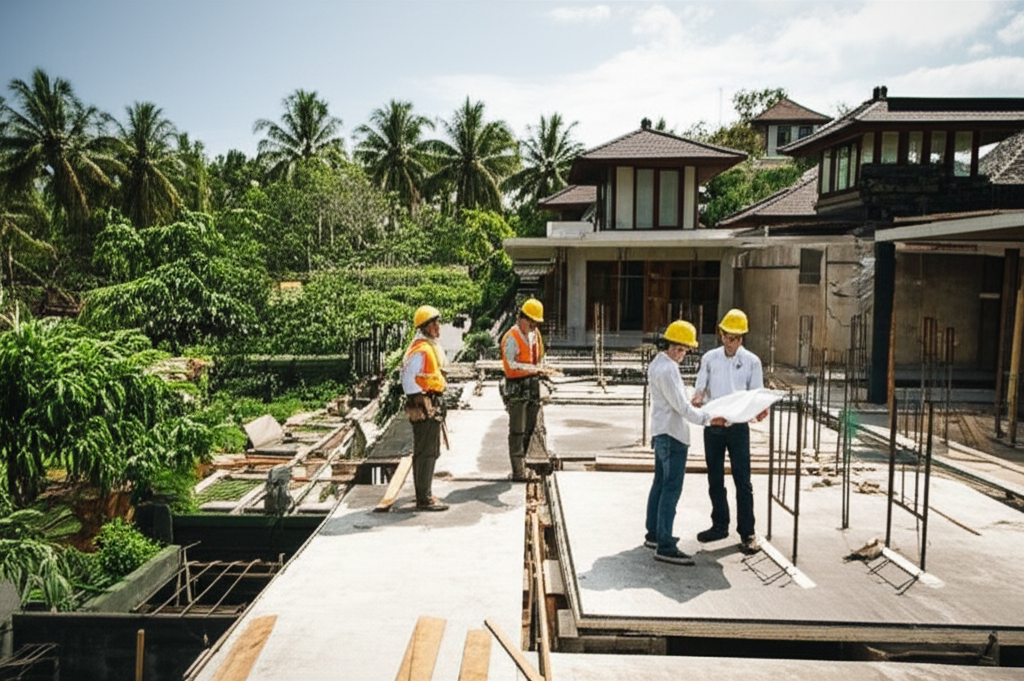
The careful selection and procurement of local construction materials are central to creating an authentic and environmentally conscious Bali villa. Indigenous resources such as volcanic stone, various hardwoods like teak and merbau, bamboo, and natural fibers not only reduce transportation costs and environmental impact but also imbue your home with a unique Balinese character. Leveraging the local workforce is equally vital. Balinese craftsmen are renowned for their skill and dedication. Typical team structures involve a lead builder (mandor) overseeing specialized teams for carpentry, masonry, and other trades. Effective supervision requires clear communication, cultural sensitivity, and respect for local customs and holidays. Building strong relationships with your local crew fosters a positive and productive environment. To ensure an expert construction process from start to finish, rigorous quality control at each stage – from material delivery to finishing touches – and efficient project scheduling are non-negotiable. Regular site inspections, adherence to architectural and engineering specifications, and proactive problem-solving maintain momentum and guarantee a superior build.
Expert Project Management Quality and Sustainability in Bali Construction
When embarking on villa construction Bali, the importance of expert project management cannot be overstated. A dedicated project manager serves as the cornerstone of the entire undertaking, meticulously orchestrating every detail from start to finish. This pivotal role encompasses rigorous budget oversight, ensuring that financial allocations are strictly adhered to, and any potential cost deviations are identified and addressed proactively through transparent reporting and vigilant tracking. Simultaneously, the project manager is responsible for uncompromising timeline adherence, developing a detailed schedule, monitoring progress against established milestones, and skillfully navigating any unforeseen delays to maintain momentum. Effective contractor coordination is another critical function, involving the seamless integration and supervision of various local trades and suppliers, resolving conflicts, and guaranteeing that all work aligns with the project’s high standards. Crucially, proactive risk management involves identifying potential challenges, whether logistical, environmental, or regulatory, and implementing robust mitigation strategies to safeguard the project’s integrity and progression. This holistic approach to construction and project management in Bali is what transforms a complex build into a streamlined and successful endeavor.
Beyond meticulous management, unwavering quality control measures are paramount in achieving a truly exceptional Bali villa. This involves not just day-to-day supervision but also conducting regular, thorough site inspections at critical stages to verify workmanship, material integrity, and adherence to design specifications and local building codes. These inspections are documented meticulously, providing a clear audit trail of quality assurance. Furthermore, establishing clear and consistent communication channels among all stakeholders—the client, project manager, architects, and various contractors—is vital. Regular progress reports, site meetings, and an open dialogue prevent misunderstandings, ensure all parties are aligned with the project’s vision, and facilitate swift decision-making, embodying best practices for construction quality control in Bali.
Integrating principles of sustainable construction in Bali is no longer a luxury but an essential component of a modern, eco-conscious villa. This commitment to sustainability is woven into the fabric of the project from conception. Energy efficiency is achieved through intelligent design, incorporating features like solar panels for renewable power generation, efficient LED lighting systems, and strategic passive ventilation to reduce reliance on air conditioning. Water conservation is addressed with rainwater harvesting systems for irrigation, greywater recycling for non-potable uses, and the installation of low-flow fixtures throughout the property. Comprehensive waste management protocols are implemented on-site to minimize environmental impact, including segregation for recycling and responsible disposal. The selection of environmentally friendly materials, prioritizing locally sourced, renewable, and non-toxic options like sustainably harvested timber or bamboo, further underscores this commitment. These sustainable practices contribute to a villa that is not only luxurious and provides a serene sanctuary but is also responsible, reducing its ecological footprint and offering long-term operational savings, making it a truly future-proof investment in paradise, reflecting innovative and sustainable building innovative construction in Bali.
From Blueprint to Bliss Completing Your Bali Villa Project
As the structural integrity and foundational elements of your dream home are firmly established, the journey transitions into the meticulous phase of bringing your vision to life through exquisite finishing works. This stage of villa construction Bali transforms raw structures into elegant living spaces. It begins with the expert installation of flooring, where choices range from cool, polished natural stone that perfectly complements the tropical climate to rich, warm hardwoods adding a touch of traditional Balinese luxury. Following this, the painting process unfolds, utilizing high-quality, durable paints resistant to humidity and sunlight, ensuring a vibrant and lasting aesthetic throughout your villa. Fixture installation is another critical step, involving the precise placement of high-end bathroom and kitchen fittings, lighting, and electrical components, all selected to enhance both functionality and visual appeal. Crucially, bespoke cabinetry crafted by local artisans integrates seamlessly into the design, offering personalized storage solutions and adding unique character to each room, truly reflecting the high-end residential construction in Bali experience.
Complementing the internal elegance is the art of landscaping in Bali, designed to create an outdoor oasis that harmonizes with your villa and its natural surroundings. Our approach focuses on incorporating indigenous plants, such as vibrant bougainvillea, fragrant frangipani, and lush tropical ferns, to create a low-maintenance yet breathtaking garden. Serene water features, from tranquil koi ponds to natural stone waterfalls, are strategically integrated to enhance the peaceful ambiance and provide a cooling effect. Thoughtfully designed outdoor living spaces, including shaded pergolas, inviting gazebos, and expansive sundecks, extend your living area into the paradise outside, offering perfect spots for relaxation or entertaining. These elements are meticulously planned to ensure your outdoor environment is as functional and aesthetically pleasing as your interior, embodying the essence of designing your perfect island home.
Upon completion of all construction and landscaping, the crucial phase of project handover commences. This involves a comprehensive final inspection conducted with you, the homeowner, to meticulously review every detail of your new Bali villa. Any identified defects, however minor, are meticulously rectified by our team to ensure absolute perfection. Following this, you will receive all necessary documentation, including operational manuals for installed systems and comprehensive warranty information for various components, providing you with peace of mind. To ensure the longevity and continued enjoyment of your exquisite property, we offer invaluable advice on villa maintenance in Bali, addressing specific challenges of the tropical climate such as humidity, pest control, and regular upkeep of finishes. For those seeking a truly hands-off experience, professional property management services are available, covering everything from routine maintenance to rental management, allowing you to fully embrace the blissful reality of your dream home in paradise.
Conclusions
Successfully navigating villa construction Bali requires careful planning, adherence to local regulations, and a deep appreciation for Balinese culture and sustainable practices. From initial land acquisition to the final landscaping, partnering with expert construction professionals ensures your vision is realized with precision and quality. Your exquisite Bali villa is not just a home; it’s a testament to thoughtful design and meticulous execution, offering a serene escape and a truly integrated island lifestyle.